Your QS Founder Nick Clements discusses human error and how better results can be achieved.
A few weeks back I was sitting in a pre-operation chair getting ready for cataract surgery when the nurse read my consent form then said, “point to your left eye”. She then put a sticker over it; I thought, you what??? Thinking on this; operating on the wrong eye is bad so they must have sound processes to prevent this.
The problem is anything that involves humans introduces the chance of errors. Be it from assumptions, inattention, incompetence, misunderstandings, negligence, lack of knowledge, distraction, or just plain brain fade. So how can we eliminate this in our businesses?
The bad news is that we can’t, all we can do is minimise the possibility, the best we can do is to make it as hard as possible to get things wrong. The greater the potential impact of a mistake, the more robust your processes need to be. When aircraft accidents happen, they say that 8 separate things need to go wrong.
It still could have gone wrong with my surgery. When I filled out the consent form, I’d ticked both eyes, as that is what I’m ultimately getting done however the receptionist was part of their process, her checking my form trapped this error early on.
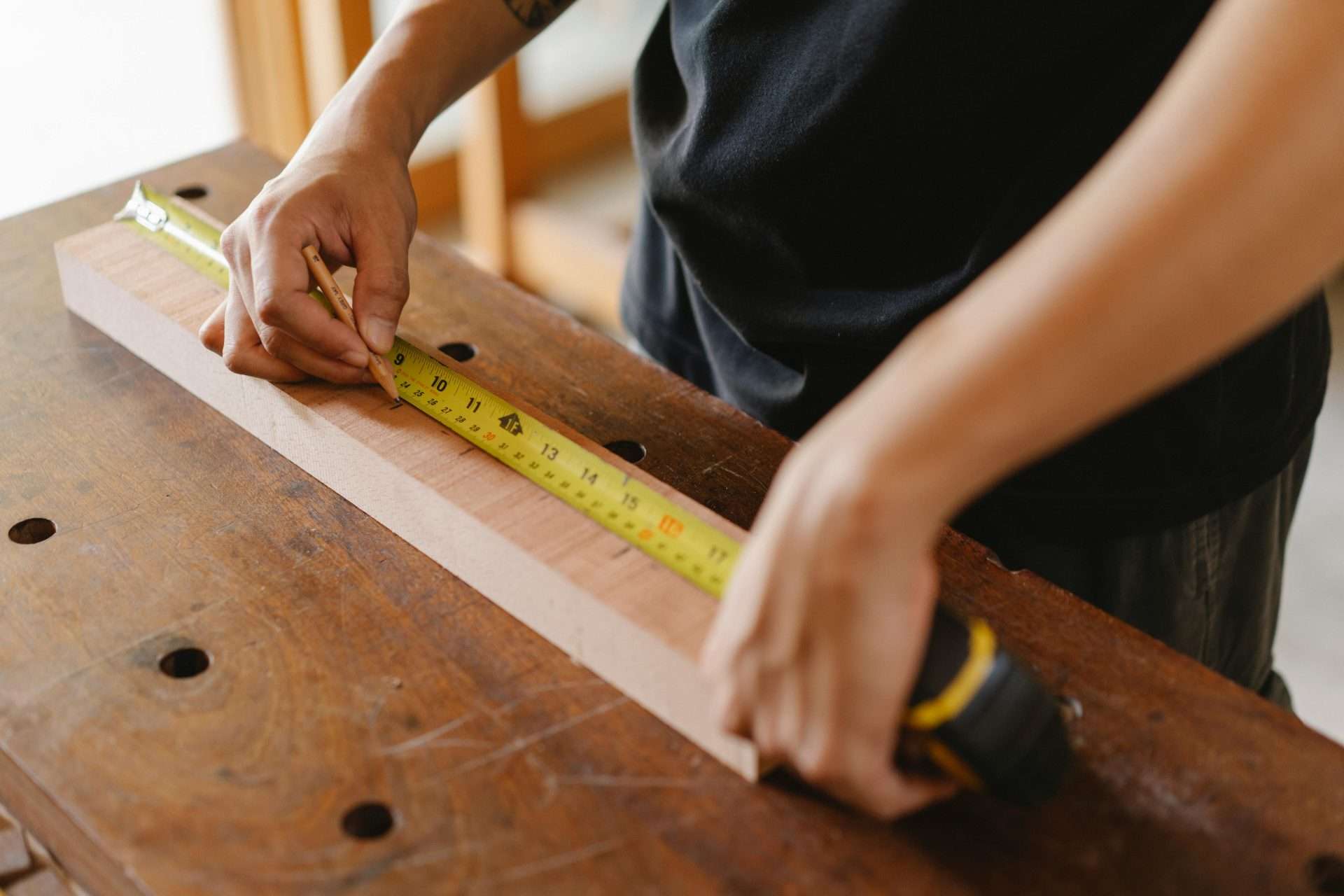
Measure Twice, Cut Once
The adage measure twice, cut once, is a process to reduce mistakes. If you are cutting 4x2s and you have plenty of spare, it is adequate. If you are cutting something rare or expensive, a more robust process would be:
- Measure location from one direction
- Measure again, but in a different way to remove potential bias
- Then measure the material left to right
- Then measure right to left
- Start the saw and nick the material, then recheck the measure
- Complete cut
Removing Human Errors from Health & Safety
We can look to implementing health and safety systems as a guide as most safety issues are people making mistakes. The key thing is to start looking at your business as a process, a set of inputs then a series of steps to create outputs. Then look at each of these to determine which are the critical ones. Look at the potential errors that could occur, come up with ideas for preventing or eliminating these. Some ideas:
- Communication – ensuring that the team are “up to speed”
- Training – ensuring that your team has the right skills
- Standard operating procedures –process documents make it easy for people to know what to do. Creating them also helps to identify any gaps in the process that might need addressing.
- Eliminate – does this need to happen? If you can remove the activity, you remove the possibility of mistakes
- Automate – can a machine or computer, do it? Neither are perfect, but they bring a high level of repeatability
- Clear, defined roles – so people know who is responsible
- In-process checks – build in checks so you can pick up problems early
- Understand the consequences of mistakes – allows you to prioritise the biggest mistake risks then identify what may cause them
Your QS Cost Estimations Removing Human Error and Increasing Accuracy
Quantity surveying has a poor reputation at estimating costs, significantly because traditional estimating is so manual and therefore prone to mistakes. We take a different approach at YourQS. Our objective is to remove human error giving a more accurate and consistent result. These are some of the things we do:
- Using a 3D model to visually measure the works – compared to scaling off a drawing and marking up in 2D
- Using algorithms to calculate costs – compared to a QS creating or adjusting a rate build up
- Requiring a check dimension – confirms that we have scaled the model correctly
- Peer reviewing all work – a second set of eyes brings a different view. Our 3D model makes this much more effective than manual take offs
- Software checks – we have a validation function that checks for common mistakes
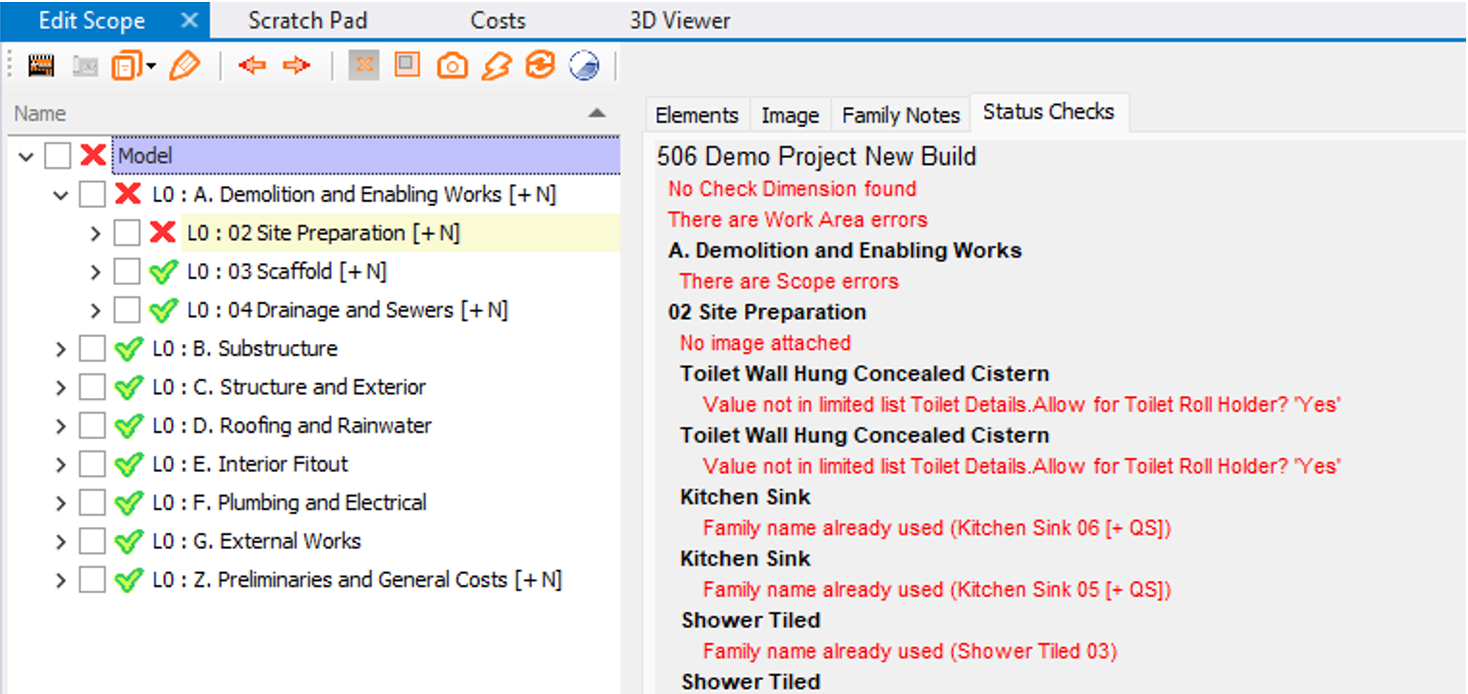
Our model validation function. The check dimension helps ensure that we have scaled the model correctly as this can be hard to spot and has large consequences.
We still read drawings and specifications then reflect this information into our costing model so there is still room for oversights and mistakes. Our BIM2YourQS process allows us to import the designer’s 3D model into our system eliminating potential areas for mistakes. We see AI helping with this as it should be able to compare our information model with the documentation looking for gaps.
Reducing mistakes isn’t a destination, it is a continuing journey made up of many little steps of improvement. I’m going to take my own advice and use this checklist to review our business again with my team to see if we can find further areas to improve.